
Last Updated: October 28, 2026
Quick Summary
To stop night sweats naturally, cool your bedroom before bed, switch to breathable fabrics like cotton muslin and linen, and layer light bedding you can remove. Track your triggers such as alcohol, caffeine, and stress for a week. See a doctor if sweats soak your bedding often or come with fever or weight loss.
- Lower the thermostat a few degrees and run a fan aimed at the bed before sleeping.
- Choose breathable fabrics such as cotton muslin, lightweight cotton, or linen for sleepwear and bedding.
- Use a thin sheet and light blanket instead of one heavy quilt so you can remove layers.
- Keep a one-week log of bedtime, evening drinks, bedding, stress, and number of sweats.
- See a doctor for sweats that soak bedding often or come with fever, chills, or weight loss.
Table of Contents
- What Causes Night Sweats Besides Menopause
- Cool Down Your Bedroom Before Bed
- How to Sleep With Night Sweats: Fabrics, Bedding and Layers
- Natural Remedies for Night Sweats That Have Some Evidence
- Track Your Triggers for One Week
- Best Pajamas for Hot Sleepers
- When Night Sweats Need a Doctor's Visit
- Start Tonight With a Cooler, Lighter Bed
- Frequently Asked Questions
Night sweats can turn a good night's sleep into a damp, restless mess. If you want to know how to stop night sweats naturally, you can start tonight with a few simple changes to your bedroom, your bedding, and your nightwear. We at Len Collection focus on comfortable, breathable sleepwear, so we have a clear stake in getting the fabric and layers right. Here's how to make your bed cooler and easier to sleep in.
What Causes Night Sweats Besides Menopause
| Cause | What it typically looks like | What usually helps |
|---|---|---|
| Warm room or heavy bedding | Sweating starts soon after you get into bed; you feel hot rather than chilled; the sweat is worse on your back and the side you lie on | Cooling the room, lighter layers, breathable fabrics |
| Alcohol close to bedtime | Sweating in the second half of the night, often with a racing heart or vivid dreams; worse after more than one drink | Moving your last drink earlier, cutting back, or skipping it |
| Caffeine and spicy food in the evening | Sweating within an hour or two of falling asleep; sometimes heartburn alongside | Moving caffeine before noon; lighter, less spicy dinners |
| Stress and anxiety | Sweating on nights after a stressful day; you may wake with a tense jaw or a racing mind | A wind-down routine, paced breathing, and stress management |
| Medications | Sweating that began or worsened within weeks of starting or changing a drug; often nightly and unrelated to room temperature | Reviewing the medication with the prescriber, never stopping on your own |
| Infection or fever | Sweating with chills, feeling unwell, or a measured fever; often accompanied by other symptoms | Medical evaluation |
| Hormonal causes other than menopause | Sweating that cycles with your period, or that comes with weight change, palpitations, or tremor | Medical evaluation and testing |
| Other health conditions | Sweating that is drenching, frequent, and unexplained by the factors above; sometimes with weight loss, cough, or swollen glands | Medical evaluation |
Cool Down Your Bedroom Before Bed
Start with the room itself. A cooler bedroom is one change you can make.
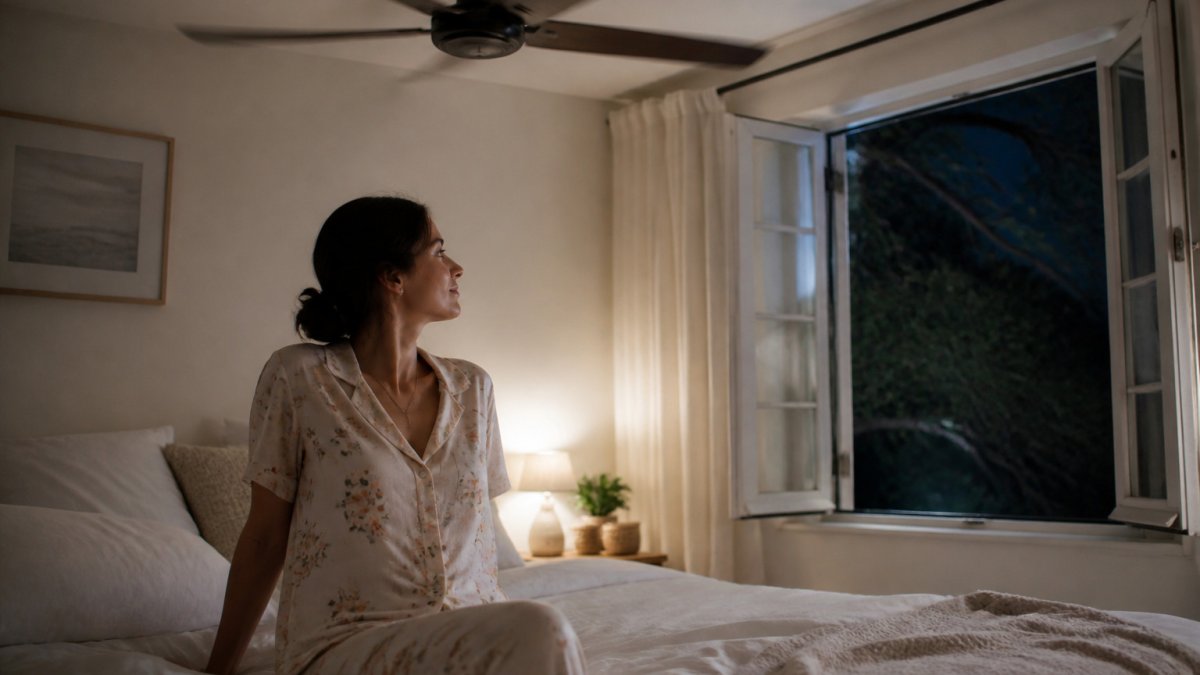
Try these steps before you go to sleep:
- Lower the thermostat a few degrees in the hour before bed.
- Run a fan aimed at the bed, or use air conditioning if you have it.
- Open a window if the outside air is cooler than the room.
- Close blackout curtains during the day to keep heat out.
- Keep a glass of cool water on the nightstand.
Watch out: Pointing a fan directly at your face all night can dry out your eyes and nose. Aim it at the bed or the room instead.
How to Sleep With Night Sweats: Fabrics, Bedding and Layers
What you wear and sleep under matters as much as the room temperature. Choose breathable fabrics.
Good choices for hot sleepers:
- Cotton muslin: Light, soft, and breathable.
- Lightweight cotton: A good everyday option for sleep and lounging.
- Linen: Naturally airy and good for warm nights.
Avoid for hot sleepers:
- Polyester and other synthetic blends that trap heat
- Thick flannel on warm nights
- Heavy comforters you cannot kick off
Layering helps too. Use a thin sheet and a light blanket instead of one heavy quilt. That way you can remove layers as you warm up without waking fully. For a deeper look at why this fabric works, read our guide on cotton muslin for hot sleepers.
Natural Remedies for Night Sweats That Have Some Evidence
"Natural" covers two very different things: lifestyle measures you control, and supplements or herbal products you swallow. They do not carry the same evidence or the same risks, so treat them separately. The framework below ranks approaches by how much support they have and how much risk they carry, so you can decide what to try first and what to clear with a clinician.
Tier 1: Low-risk lifestyle measures worth trying first
- Cooling at the moment a sweat starts. A cool compress or cool water on the wrists and neck can take the edge off while you cool the room and remove a layer.
Tier 2: Popular remedies with mixed or limited evidence
- Evening primrose oil and similar supplements. Commonly marketed for hormonal symptoms, but evidence for night sweats specifically is weak.
Tier 3: Skip or clear with a clinician first
- Products marketed as "hormone balancing" without a stated dose or standardized extract. You cannot evaluate what is not disclosed.
How to test a remedy without fooling yourself
- Change one thing at a time. If you start three remedies in the same week, you will not know which one helped.
- Give it two to three weeks. Most lifestyle measures need consistent practice before you can judge them; a single night tells you little.
- Use your trigger log as the measure. Compare the number and severity of sweats before and after, not just how you feel.
- Stop if something makes you feel worse. New symptoms, digestive upset, or a change in sleep are reasons to stop and ask.
Track Your Triggers for One Week
For one week, keep a simple log of your nights.
Women’s Floral 100% Cotton Muslin Pajama Set – Long Sleeve Button-Up Sleepwear →
Each morning, write down:
- Bedtime and room temperature (a cheap thermometer helps)
- What you ate and drank in the evening, including alcohol and caffeine
- What you wore and slept under
- Stress level on a 1-to-5 scale
- Number of sweats and how bad they were
Best Pajamas for Hot Sleepers
Look for a relaxed fit. Shop the long-sleeve cotton muslin pajama set for a breathable two-piece option with a relaxed fit.

These options from Len Collection are made from 100% cotton muslin:
- Women's Floral 100% Cotton Muslin Pajama Set - Long Sleeve Button-Up Sleepwear, $37.00. A two-piece set with a long-sleeve button-up top and full-length pants. The relaxed fit suits sleeping and lounging.
- 100% Cotton Muslin Women's Blue Floral Short Pajama Set - Button-Up Sleepwear, $27.00. A lighter short-sleeve option with matching shorts for warmer nights. You can see the blue floral short pajama set in full detail on its product page.
- 100% Cotton Muslin Women's Floral 2-Piece Lounge Set - Casual Button-Up Top & Wide-Leg Pants, $37.00. A short-sleeve top with wide-leg cropped pants, suited to lounging and everyday wear at home.
For a bit more, see our guide to sleeping cooler in cotton pajamas.


When Night Sweats Need a Doctor's Visit
See a doctor if you notice:
- Night sweats that soak your bedding or pajamas regularly
- Fever, chills, or unexplained weight loss
- Sweating that started with a new medication
- Night sweats that disrupt your sleep most nights for several weeks
- Swollen lymph nodes or a persistent cough
Bring your one-week trigger log to the appointment. It gives your provider useful information right away.
Start Tonight With a Cooler, Lighter Bed
You do not need to change everything at once. Pick two or three steps and try them tonight: lower the thermostat, switch to a lighter sheet, and put on breathable cotton. Track what happens for a week, then adjust. If the sweats continue or come with other symptoms, talk to a doctor. Cooler sleep is within reach, starting with your next bedtime.
Frequently Asked Questions
Can you stop night sweats?
In many cases, yes. Night sweats often respond to changes you can make at home: keeping the bedroom cool, wearing breathable cotton, avoiding common triggers like alcohol, caffeine and spicy food close to bedtime, and managing stress. If the sweating continues despite these steps, or comes with fever, weight loss or drenching sheets, it is worth a checkup to look for a medical cause. Tracking your sweats for a week can show which changes help most.
What should I wear to bed if I get night sweats?
100% cotton muslin is breathable. Len Collection offers button-up sleepwear.
Can changing my bedroom temperature help with night sweats?
Yes. Most people sleep better in a cool room, and lowering the temperature can reduce how often you wake up sweating. Try setting the thermostat a few degrees lower, running a fan aimed at the bed, or keeping a window open if the outside air is cool. A cold compress on the neck or wrists can also give quick relief when a sweat starts.
When should I talk to a doctor about night sweats?
See a doctor if night sweats are soaking your bedding, happen with no clear cause, or come with fever, unexplained weight loss, swollen lymph nodes or ongoing fatigue. These can signal an infection, a thyroid problem or another condition that needs testing. If you are in perimenopause or menopause, a doctor can also discuss hormone therapy and other prescription options for hot flashes and night sweats.
