
Last Updated: October 23, 2026
Quick Summary
To sleep cooler in cotton pajamas, choose a lightweight, loose weave like muslin, which lets air pass through so heat escapes instead of building up. Pick a relaxed fit with short sleeves and a button-up front, and skip heavy blends, tight cuffs, and polyester content.
- Look for a fabric weight under about 4 oz per square yard for summer sleepwear.
- Muslin's open weave moves more air than a tight plain weave, so heat escapes.
- A loose-fitting cotton pajama keeps you cooler than a snug one because air moves between fabric and skin.
- Cotton absorbs sweat but dries slowly, so keep a dry backup set within reach on bad nights.
- Skip fabric softener when washing, since it coats fibers and can reduce airflow.
Table of Contents
- Why Cotton Pajamas Can Keep You Cool (When You Choose Right)
- Step 1: Pick the Right Cotton Weave and Weight
- Step 2: Get the Fit Right for Airflow
- Step 3: Choose the Best Pajamas for Hot Sleepers
- Step 4: Use Cotton Pajamas for Night Sweats Strategically
- Step 5: How to Stay Cool While Sleeping Beyond Your Pajamas
- Step 6: How to Wash Cotton Pajamas Without Ruining Breathability
- Conclusion
- Frequently Asked Questions
Why Cotton Pajamas Can Keep You Cool (When You Choose Right)
Cotton pajamas can keep you cool because cotton fiber absorbs moisture and lets air pass through the fabric, which helps your skin stay drier and closer to a comfortable temperature.
A 2024 review in PubMed Central's review of sleepwear fiber types reports that sleepwear and bedding materials affect sleep quality by influencing skin and body temperature and thermal comfort.
Here is the good news. Cotton sits on the right side of that line, as long as you pick the right cotton.
How Cotton Moves Heat and Moisture
Cotton is a moisture-absorbing natural fiber. It pulls sweat away from your skin and holds it in the fabric until it evaporates.
That matters because damp skin feels hotter. When sweat sits on your skin, your body struggles to cool itself. Cotton gives that moisture somewhere to go.
Two limits are worth knowing up front:
- Cotton absorbs sweat but dries slowly compared with synthetic wicking fabrics.
- Heavy, tight cotton holds heat instead of releasing it.
So the fiber is only half the answer. A 2016 study in PubMed Central on fabric effects on sleep looked at how textile fabrics influence sleep under different conditions, which supports the same point: the fabric you sleep in shapes your night.
Step 1: Pick the Right Cotton Weave and Weight
The right cotton for hot sleepers is a lightweight, loose weave, and muslin is the strongest choice. Muslin's open weave lets more air through than a tight plain weave, so heat escapes instead of building up against your skin.
Fabric weight is the number most shoppers ignore. A heavy cotton flannel traps warmth by design. A light cotton voile or muslin does the opposite.
Muslin, Pima, and Plain Weave Compared
| Weave | Feel | Airflow | Best For |
|---|---|---|---|
| Muslin | Soft, slightly textured | High | Hot sleepers, humid nights |
| Pima cotton | Smooth, dense | Medium | Cooler rooms, softer hand-feel |
| Plain weave | Crisp, flat | Medium-low | Everyday wear, not peak heat |
| Cotton voile | Sheer, very light | High | Peak summer, minimal coverage |
| Cotton flannel | Brushed, insulating | Low | Cold rooms only |
Muslin wins for warm weather because the loose structure moves air. Pima cotton feels luxurious and lasts well, but its denser weave holds more heat. Plain weave sits in the middle. Voile is the lightest common option and behaves like muslin for airflow, though it is more sheer and less durable.
How Weave Mechanics Affect Heat
Weave is not a marketing word; it describes how threads cross. A plain weave crosses one thread over, one under, creating a tight, flat surface with small gaps.
Thread count matters less than people assume for cooling. Very high thread counts can actually mean a denser, less breathable fabric. For hot sleepers, a moderate thread count in a loose weave beats a high thread count in a tight one.
Construction Details That Change Everything
Two pajamas made from identical muslin can perform very differently depending on construction:
- Seams and binding: Thick, doubled seams and tight elastic waistbands trap heat at the waist and shoulders. Look for flat seams and soft, covered elastic or a drawstring.
- Lining and interfacing: Any lined bodice, fused placket, or stiff collar adds a layer that blocks airflow. Unlined, single-layer construction is cooler.
- Trim and blends: Polyester thread, lace trim, or spandex-blend cuffs reduce breathability even when the main fabric is 100% cotton. Check the fiber content tag, not just the front label.
If you want to see what a long-sleeve muslin option looks like for cooler nights, our long-sleeve cotton muslin pajama set shows the same open weave in a warmer cut.

Step 2: Get the Fit Right for Airflow
A loose-fitting cotton pajama keeps you cooler than a snug one, full stop. Air needs room to move between the fabric and your skin. Tight cotton presses against your body, traps sweat, and blocks airflow.
Look for:
- A relaxed cut through the chest and shoulders
- Room to bend and stretch without the fabric pulling
- Wide or straight legs instead of tapered ones
Freedom of movement is not just comfort. It is cooling. When fabric stays off your skin, heat and moisture escape faster.
Step 3: Choose the Best Pajamas for Hot Sleepers
The best pajamas for hot sleepers are lightweight cotton muslin sets with short sleeves, a relaxed fit, and a breathable weave. Skip heavy blends, tight cuffs, and anything with polyester content.
Women’s Floral 100% Cotton Muslin Pajama Set – Short Sleeve Button-Up Sleepwear →
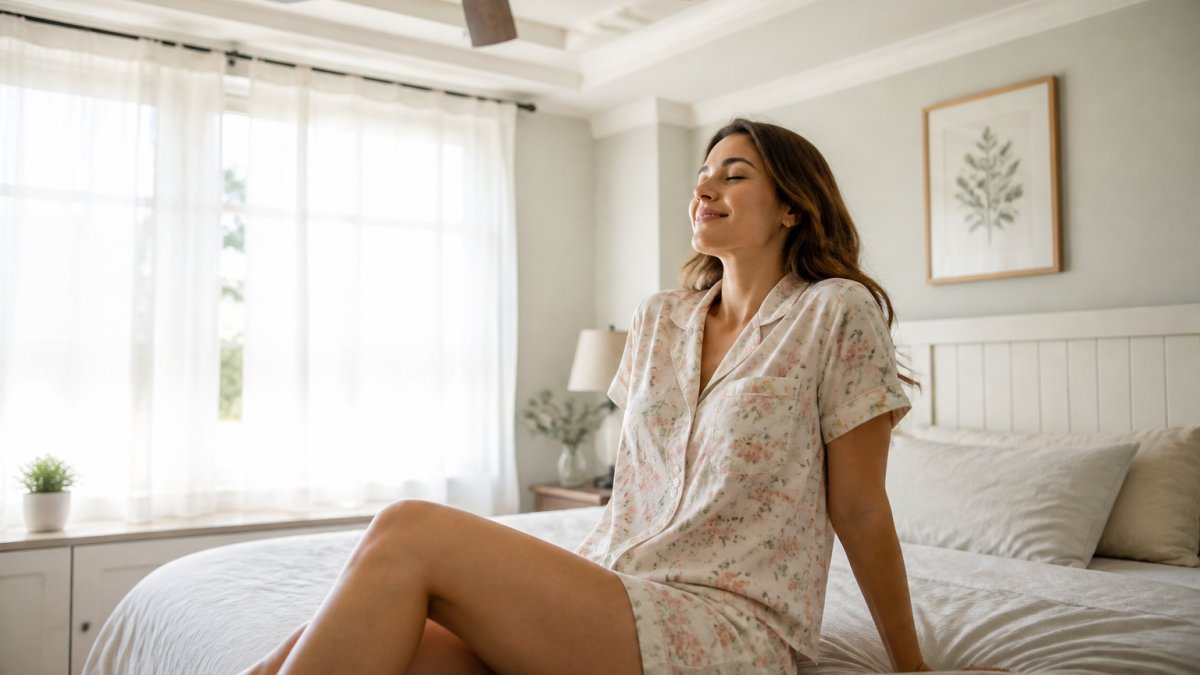
Our pick is the short-sleeve floral cotton muslin pajama set from Len Collection. It is 100% cotton muslin, cut relaxed, with a button-up front and shorts.

A quick checklist before you buy:
- 100% cotton, ideally muslin
- Short sleeves or a loose long sleeve
- Button front for adjustable ventilation
Step 4: Use Cotton Pajamas for Night Sweats Strategically
Cotton pajamas for night sweats help you stay cooler and drier, but they do not stop sweating. Sweating is your body's cooling system. Pajamas manage the sweat, not the cause.
Where Cotton Helps, and Where It Doesn't
Cotton absorbs moisture well, which is why it feels comfortable against skin during light perspiration. The fiber can take up a meaningful share of its own weight in water before it feels wet, so a light muslin pajama handles ordinary warmth and mild sweating without clinging.
The limit is drying speed. Once cotton is saturated, it holds moisture against your skin and dries more slowly than synthetic wicking fabrics or wool. For a heavy sweater, that means a soaked cotton pajama can turn cold and clammy partway through the night.
A Simple Decision Guide by Climate and Sleep Habits
Use your situation, not a generic recommendation, to decide how to wear cotton at night:
- Humid, warm room, light sweater: Light muslin, short sleeves, relaxed fit. Cotton is close to ideal here because the open weave lets humid air and vapor move.
- Dry, warm room, light sweater: Muslin or voile works well; add a fan to keep air moving so evaporated moisture leaves the bed area.
- Cool room, heavy sweater: Choose a lighter cotton than you think you need, keep a spare set nearby, and consider a moisture-wicking base layer under the cotton rather than a heavier pajama.
- Hot flashes or night sweats with chills: Layer a light cotton pajama over a thin wicking tee so you can shed the cotton layer when you heat up and pull it back on when you cool down.
Practical Tactics That Actually Help
- Wear a light cotton layer and keep a spare set nearby for a mid-night change. A dry change takes under a minute and resets your comfort.
- Choose short sleeves if you sweat heavily at the torso; expose the areas that sweat most.
- Skip heavy blankets over cotton pajamas; let the fabric do its job and use a light sheet instead.
- Pre-cool the room and use a fan before bed so the air is already moving when you get warm.
Step 5: How to Stay Cool While Sleeping Beyond Your Pajamas
Knowing how to stay cool while sleeping means treating your pajamas as one part of the sleep environment, not the whole fix. Room temperature, bedding, and airflow all pull in the same direction.
Try these:
- Set the room cooler than you think you need.
- Use a ceiling fan or floor fan to keep air moving.
- Choose light cotton bed sheets, not heavy synthetics.
- Lower humidity where you can; damp air slows sweat evaporation.
Len Collection's cotton muslin lounge set works here. The wide-leg pants and button-up top move air and stay presentable if you get up early.

Step 6: How to Wash Cotton Pajamas Without Ruining Breathability
Washing cotton pajamas the right way keeps the weave open and the fabric soft. Heat and heavy softeners are the two things that quietly wreck breathability.
How to wash cotton pajamas:
- Machine wash cold with similar colors on a gentle cycle.
- Skip bleach and fabric softener; softener coats fibers and can reduce airflow.
- Tumble dry low or hang dry to protect the weave.
- Cool iron only if needed.
Fabric softener is the sneaky one. It leaves a film on cotton that can make the fabric feel smoother but less breathable over time. Skip it and your muslin stays open.
Conclusion
Hot sleepers do not need exotic fabrics. They need cotton chosen and cared for correctly: a light muslin weave, a relaxed fit, short sleeves, and a wash routine that protects the fabric.
Len Collection makes this simple. Our 100% cotton muslin pajama sets use a breathable open weave, come in button-up styles you can vent at night, and include short-sleeve and long-sleeve options for different seasons.
Choose Len Collection and sleep cooler in cotton pajamas built for warm nights.
Frequently Asked Questions
Are cotton pajamas good for hot sleepers?
Cotton pajamas can work well for hot sleepers when you choose the right weave and fit. A 2024 review in PubMed Central found that sleepwear materials affect sleep quality by influencing skin and body temperature and thermal comfort. Lightweight cotton muslin, loose cuts, and breathable weaves help air move across your skin. Heavier cotton or tight fits trap heat, so fabric weight and construction matter as much as the fiber itself.
What is the best material for pajamas to prevent night sweats?
No fabric prevents night sweats entirely. Reducing insulation, by removing pajamas or switching to lighter layers, helps your body release heat. Cotton muslin, linen, and lyocell are popular lightweight options. Cotton pajamas for night sweats work best when the weave is open, the fit is loose, and you pair them with breathable bedding. If sweating is heavy or persistent, talk to a doctor about underlying causes.
How often should you wash cotton pajamas if you sweat at night?
Wash cotton pajamas after every one to two wears if you sweat at night. Sweat and skin oils build up in the fabric, which reduces breathability and can irritate sensitive skin. Use cold water on a gentle cycle, skip fabric softener because it coats fibers and blocks airflow, and tumble dry low or hang dry. Rotating two or three pairs keeps you covered between laundry days.
Should you wear loose-fitting pajamas to bed?
Yes, loose-fitting pajamas generally sleep cooler. A relaxed cut lets air circulate between the fabric and your skin, which supports heat release. Lighter layers and less insulation make it easier for the body to shed heat. Look for wide-leg pants, roomy short-sleeve tops, and button-up fronts you can open for extra ventilation on warm nights.
Have a sizing or fabric question before you order? Contact us and we will help you find the right set.
