
Table of Contents
- Why Prewashing Cotton Muslin Matters
- Should You Prewash Muslin Fabric Before Wearing
- Best Water Temperature for Washing Muslin
- Step-by-Step: How to Wash Muslin Pajamas
- How to Dry Cotton Muslin Without Shrinking
- What to Do If Your Cotton Muslin Already Shrank
- Caring for Your Muslin Pieces Long-Term
- Frequently Asked Questions
Last Updated: October 17, 2026
Why Prewashing Cotton Muslin Matters
Prewashing cotton muslin before you wear or use it is the difference between fabric that stays soft and correctly sized versus pieces that shrink after the first wash. Cotton contains sizing, a starch-like coating applied during manufacturing that traps dust and chemicals.

When you skip prewashing, that sizing stays in the fabric. The first time your muslin hits hot water or a warm dryer, the sizing releases. The fibers contract. Your pajamas or projects shrink.
Prewashing removes this sizing before it becomes a problem, along with residual dyes and chemicals that can irritate sensitive skin, which matters for sleepwear worn for hours.
Prewashing all cotton muslin pieces before first wear protects your investment and ensures your pieces perform from day one.
Should You Prewash Muslin Fabric Before Wearing
Yes, you should prewash cotton muslin before wearing it. Prewashing removes the fabric sizing, dust, and manufacturing chemicals that can cause shrinkage or skin irritation. The question isn't whether to prewash, it's how, a gentle cold wash stabilizes the fabric and prevents problems later.

Here's what prewashing accomplishes:
- Removes sizing that causes shrinkage when exposed to heat
- Eliminates dust and chemical residues from manufacturing
- Reduces dyes that haven't been fully set, preventing color bleeding
- Softens the fabric naturally, making it more comfortable against skin
- Stabilizes the weave so future washes cause minimal additional shrinkage
Skipping this step means risking surprises. Your favorite pajama set could shrink a full size after the first real wash. Or colors could bleed onto other garments. Prewashing takes 30 minutes and prevents weeks of regret.
Best Water Temperature for Washing Muslin
Use cold water when you wash cotton muslin. Cold water prevents shrinkage and protects colors better than warm or hot water.

Cotton fibers contract in response to heat, warm water speeds this up, hot water accelerates it further. To minimize shrinkage, cold water is non-negotiable.
Here's how temperature affects your fabric:
- Cold water (below 60°F): Minimal shrinkage risk, colors stay true, fibers remain stable
- Lukewarm water (60-80°F): Slight shrinkage possible, acceptable for established fabric
- Warm water (above 80°F): Noticeable shrinkage, color fading, not recommended for new muslin
Some quilters deliberately use hot water and high heat to pre-shrink fabric before cutting, intentional pre-shrinking, not accidental damage. For pajamas, lounge sets, and finished garments, cold water is the safer choice.
Step-by-Step: How to Wash Muslin Pajamas
Follow this method to wash your cotton muslin pajamas safely without unnecessary shrinkage.
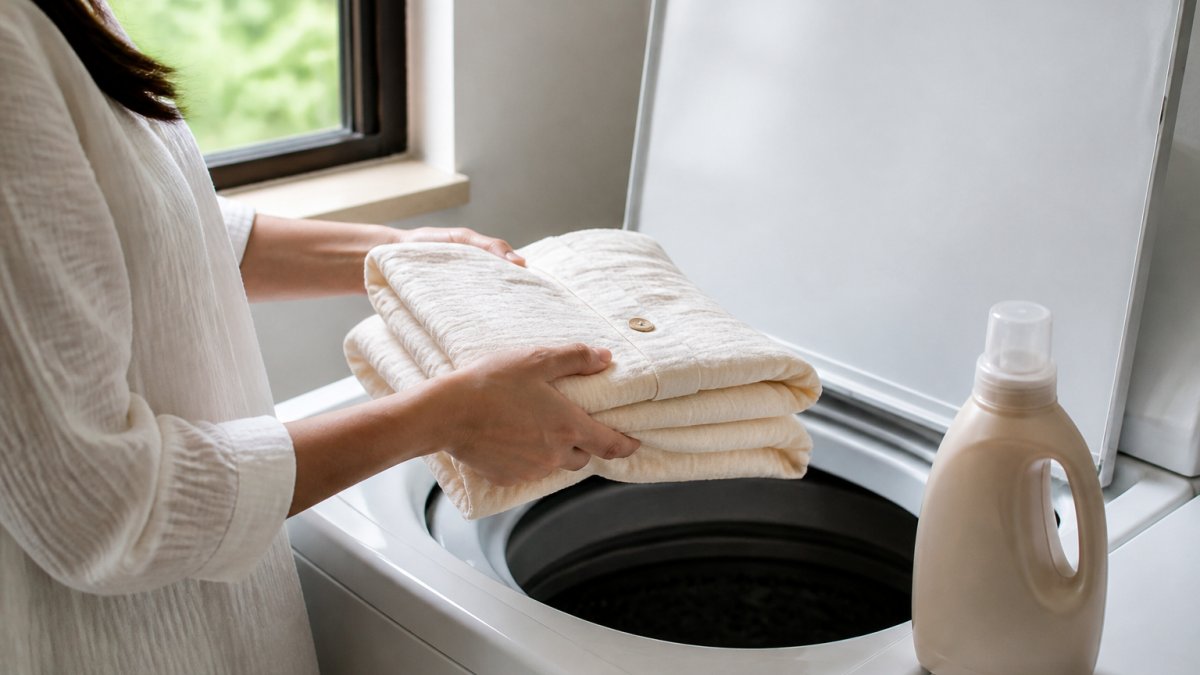
1. Check the care label Read any care instructions that came with your pajamas. If the label says hand wash only, follow it.
2. Sort by color Separate light and dark muslin items. New or deeply dyed fabrics can bleed, especially in the first few washes.
3. Set your machine to cold water and gentle cycle Cold water is essential.
4. Add gentle detergent Use a mild, fragrance-free detergent or baby-safe formula.
5. Load the machine loosely Don't pack the drum full. Fabric needs space to move freely.
6. Skip the fabric softener Fabric softener coats fibers and reduces breathability, so skip it entirely.
7. Run one complete cycle Let the machine finish. Don't interrupt mid-cycle.
Machine Washing vs. Hand Washing
Machine washing is faster and works well for established muslin. Use the gentle cycle with cold water, most pieces survive machine washing without issues once prewashed.
Hand washing is gentler and gives you more control. Fill a basin with cold water, add a small amount of gentle detergent, submerge the fabric, agitate gently for a few minutes, and rinse in cold water until it runs clear. It takes 10-15 minutes but reduces mechanical stress on fibers; choose it if you're concerned about shrinkage or the care label specifies it.
For regular maintenance after the first prewash, machine washing on gentle cycle is fine and saves time.
Choosing the Right Detergent
Select a mild detergent free of heavy chemicals. Look for:
- Baby-safe formulas like Dreft or All Free Clear work well
- Fragrance-free options prevent scent buildup and skin irritation
- Gentle plant-based detergents clean effectively without harsh chemicals
- Avoid: bleach, optical brighteners, heavy perfumes, enzyme-based cleaners
Use about half the recommended dose, the fabric is already clean from manufacturing; you're just removing sizing and dust.
How to Dry Cotton Muslin Without Shrinking
Drying is where most accidental shrinkage happens, and the step most guides gloss over. The goal: remove moisture without exposing cotton fibers to sustained heat or mechanical tumbling that pulls the weave out of shape.
Women’s Floral 100% Cotton Muslin Pajama Set – Long Sleeve Button-Up Sleepwear →
The drying hierarchy, with real settings
Best option: Air dry flat, away from direct sun Lay the garment or fabric flat on a clean towel or mesh drying rack and smooth it so the weave sits square, no stretching, no bunching.
Good option: Air dry on a hanger or rack Hang tops and straight-cut pieces from a drying rack or padded hanger, avoid wire hangers, which leave shoulder points.
Acceptable option: Machine dry on the lowest heat setting If you use a dryer, select the lowest heat setting, usually labeled "delicate," "low," or "air fluff", and finish the cycle while items are still slightly damp.
Avoid: Medium heat, high heat, and timed dry cycles Sustained heat is the biggest driver of shrinkage in cotton muslin.
A step-by-step drying sequence
- Remove from the washer promptly. Leaving damp muslin in the drum encourages wrinkles and sets creases that are hard to press out.
- Reshape while damp. Gently smooth seams, hems, and button plackets with your hands. Do not wring or twist, press water out against the side of the basin or roll the piece in a clean towel.
- Choose flat or hanging based on cut. Flat for wide-leg pants, bias pieces, and anything heavy when wet; hanging for simple tops and straight cuts.
- Keep out of direct sunlight. UV fades dyed and printed muslin faster than you'd expect; a shaded, ventilated room is ideal.
- Check before storing. Fabric should feel completely dry, especially thick seams and waistbands, before folding, or it can develop a musty smell.
Why heat shrinks muslin
Cotton fibers are held under tension during weaving and finishing. Heat and moisture relax that tension, and the fibers contract toward their natural state. The effect is cumulative: the first hot wash or dry cycle does most of the damage, but every high-heat exposure adds more. Cold washing and low- or no-heat drying keep fibers close to their finished dimensions, so a garment can survive years of cold-water care and still fit as it did on day one.
What to Do If Your Cotton Muslin Already Shrank
Shrinkage is usually permanent, but "usually" leaves room for action. Before you write off a piece, know how much it shrank and which recovery methods are worth trying.
First, measure what actually happened
You can't fix shrinkage you haven't quantified. Grab a tape measure and check three things against the original fit or a known reference:
- Length: measure from the shoulder seam to the hem on a top, or from waistband to hem on pants.
- Width: measure across the chest or hip, seam to seam, laid flat.
- Weave squareness: check that the side seams run straight and the hem is parallel to the floor. A warped piece will pull to one side even if the measurements look close.
Untreated cotton muslin commonly shrinks 2-5% on the first hot wash, with heavier weights and looser weaves moving more than tight, finely woven muslin. If your piece moved within that range, recovery is more likely than if it shrank a full size.
Recovery methods worth trying
1. The cool-soak-and-stretch method Fill a basin with cool water and a pea-sized amount of gentle hair conditioner. Submerge the garment for 15-20 minutes, lift it out without wringing, lay it flat on a towel, and gently ease the fabric back toward its original measurements, pinning edges to a towel or blocking mat if you have one. Let it dry flat.
2. Steam and press A garment steamer or cool iron with steam can relax slightly contracted fibers. Press from the wrong side along the grain, stretching gently as you go. Avoid high heat, you'll set the new size rather than relax it.
3. Wear-and-wash easing Some muslin softens and eases back slightly with a few gentle wears and cold washes. This won't restore a full size, but it can make a borderline piece wearable again.
When recovery isn't realistic
If a piece shrank more than about 5% or warped badly, the fibers have usually set in their new dimensions and no soaking will bring it back. Practical options: repurpose the fabric, a shrunken top can become a cropped layer or a child's garment, or treat it as a lesson in prewashing. If shrinkage happened despite following the care label, check the retailer's return or replacement policy.
Preventing the next one
The fix is upstream: prewash cut yardage before sewing, wash finished pieces in cold water on a gentle cycle, and dry flat or on low heat. If you sew, note the fabric's before-and-after dimensions during prewash so you buy enough yardage.
Caring for Your Muslin Pieces Long-Term
After the initial prewash, ongoing care is straightforward.
Wash in cold water on a gentle or regular cycle. Low-heat or air drying remains best practice to extend the life of your pieces.
Muslin softens with each wash, becoming more comfortable over time, one of its best qualities, improving with age rather than degrading.
Store clean, dry muslin pieces in a cool, dry place. Fold rather than hang to prevent stretching. A cool iron handles wrinkles fine; avoid high heat.
Muslin resists pilling and holds color well once established through the first few washes. Your pieces should look and feel great for years with basic care.
Washing cotton muslin correctly protects your investment and keeps your pieces comfortable season after season. The key steps, cold water, gentle detergent, and air drying, are simple but essential.
When you choose Len Collection's 100% cotton muslin pajama sets, you're investing in fabric that rewards proper care. Our Women's Floral 100% Cotton Muslin Pajama Set - Long Sleeve Button-Up Sleepwear and 100% Cotton Muslin Women's Floral 2-Piece Lounge Set are designed to last when cared for properly.
| Washing Step | Method | Why It Matters |
|---|---|---|
| Prewash | Cold water, gentle cycle | Removes sizing and chemicals |
| Temperature | Cold water only | Prevents shrinkage and color fading |
| Detergent | Mild, fragrance-free | Protects fibers and skin |
| Drying | Air dry or low heat | Eliminates heat-related shrinkage |
| Long-term care | Cold water, gentle handling | Extends fabric life and softness |
Frequently Asked Questions
Does cotton muslin shrink in the wash?
Cotton muslin can shrink if exposed to hot water or high heat drying. Most shrinkage occurs in the first wash. Using cold water and air drying minimizes this risk significantly. Proper washing techniques can help minimize shrinkage. Your Len Collection muslin pieces are crafted from 100% cotton muslin.
What water temperature should you use to wash cotton muslin?
Always use cold water (below 60°F) when washing cotton muslin. Cold water prevents the fibers from relaxing and shrinking. Lukewarm or warm water increases shrinkage risk significantly. Set your washing machine to a gentle cycle with cold water to help your muslin maintain its dimensions.
Should you prewash muslin fabric before wearing it?
Prewashing can be helpful if you want to remove any residual fabric sizing or dust from manufacturing. If you do prewash, use cold water and a gentle cycle, then air dry.
Can you machine-wash cotton muslin pajamas?
Yes, you can machine-wash cotton muslin pajamas safely. Use a gentle cycle with cold water and turn pieces inside-out to protect prints and piping details. Place them in a mesh laundry bag for extra protection if washing with other items.